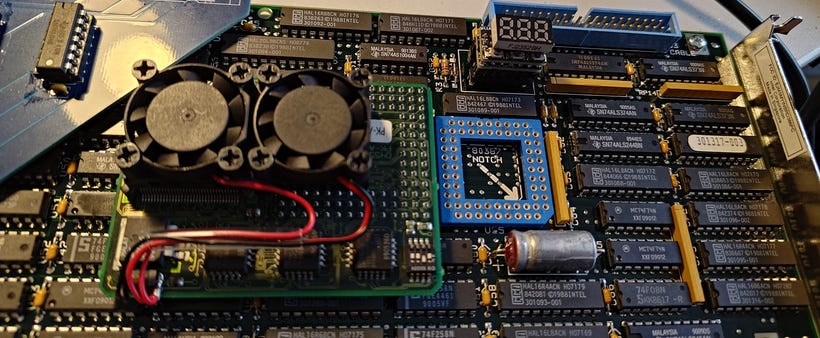
Recent viewers of my videos have no doubt seen that I've brought a poor old IBM XT 5160 up to the crazy heights of 96MHz via the use of an Intel Inboard 386/PC and an IBM Blue Lightning BL3.
However, I always had a sneaking suspicion that the machine wasn't running as fast as it possibly could be.
I wondered that if I reduced the clock speed a little, it might not try to smash everything down the 'pipe', meaning that going slower might actually mean going a little faster. That was the ‘rough science’ theory. To test the theory, I'd need to swap out the clock for a faster clock crystal (40MHz instead of 32MHz), but then reduce the clock multiplier from 3x to 2x. This would result in an 80MHz final speed, rather than the current 96MHz speed. Changing the 32MHz clock to 40MHz would bump the CPU Front Side Bus speed up from 16MHz to 20MHz. This gives a 25% increase in memory bandwidth (16->20) while only sacrificing 16.6% CPU speed (16x6=96 -> 20x4=80).
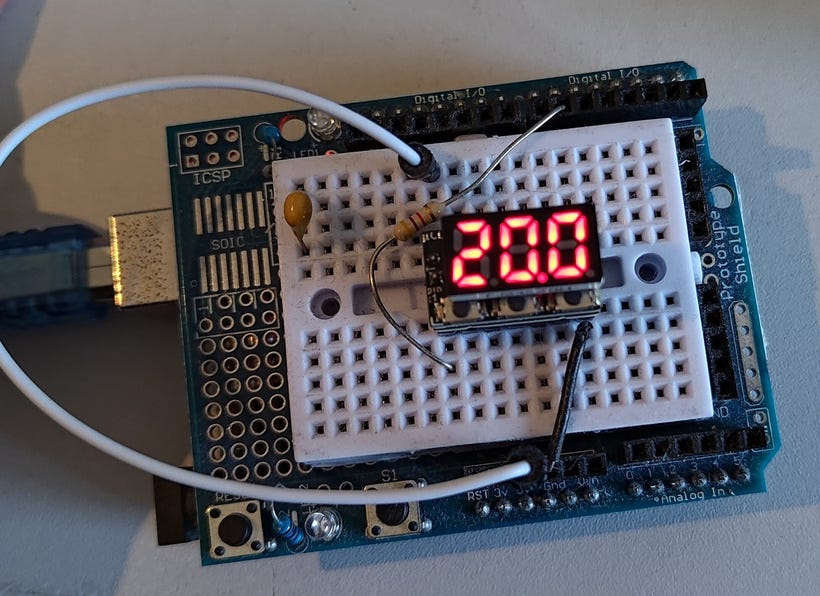
Since this requires that one de-solders the original 32MHz crystal oscillator on the Inboard and replace with a 40MHz one, this would mean if I wanted to do any more 'twiddling', I'd need to get a number of slightly different crystals. Doing this is quite tedious, as I'd have to de-solder and solder in a new crystal every time, or at least socket a crystal. Wouldn't it be great if I could change the clock speed on the fly.... programmable... dynamically, if you will. Enter the micro CLK486, from my friend Jacob. He invented an awesome PLC based programmable clock circuit, which will shortly be available at his little retro shop of goodness (Monotech Vintage PCs). The 3 buttons on the device allow you to dynamically set the clock to any speed you like up to 99.9MHz.